How to Rent Out Your Property in Singapore: Complete Landlord Guide (2026)
Renting out property in Singapore — whether an HDB flat you are temporarily not occupying, an investment condo, or a landed home — involves a clear set of rules, processes, and ongoing responsibilities that many first-time landlords underestimate.
This guide walks through the complete process for 2026: eligibility checks, approval processes, finding tenants, the tenancy agreement, tax obligations, and the mistakes that create problems later.
Part 1: HDB Flat Subletting
Can You Rent Out Your HDB Flat?
Not all HDB owners can sublet their flat. Before marketing the unit, confirm all three conditions are met:
Condition 1 — MOP fulfilled: You must have lived in the flat for at least 5 years (the Minimum Occupation Period) from the date of key collection or legal completion. This applies regardless of whether you bought a BTO or a resale flat. You can check your MOP status on the HDB Flat Portal under My Flat Dashboard.
Condition 2 — Eligibility not affected: Certain HDB conditions — outstanding upgrading cost payments, ethnic integration policy requirements, or CPF refund obligations — can affect your ability to sublet. HDB's subletting approval process will flag these automatically.
Condition 3 — Owner-occupied or approved for subletting: If you own another residential property, renting out your HDB requires specific approval. Check with HDB if your situation involves multiple property ownership.
The HDB Subletting Approval Process
Non-citizens legally residing in Singapore must hold an Employment Pass, S Pass, Work Permit, Student Pass, Dependant Pass or Long-Term Social Visit Pass with at least 6 months validity as at the date of application.
Before renting to non-citizen tenants, you must apply to HDB for approval:
Step 1: Log in to the HDB Resale Portal and check the Non-Citizen Quota status for your block. HDB whole-flat tenants are subject to a Non-Citizen Quota of 8% at neighbourhood level and 11% at block level. If your block has reached its quota for non-citizen tenants, you can only rent to Singapore Citizens or Malaysians until the quota clears.
Step 2: Once you have a prospective tenant, submit a subletting application to HDB via the HDB Flat Portal. You will need: the tenant's pass details and validity dates, the proposed rental period and rent amount, and your own particulars as the flat owner.
Step 3: HDB processes the application — typically within a few working days. Approval is granted for a specific rental period, not open-ended. HDB whole-flat leases for non-Malaysian foreigners are capped at 2 years per approval.
Step 4: You must update HDB each time you renew the tenancy or rent to a new tenant.
HDB Subletting Rules You Must Follow
- Minimum rental period: 6 months per lease. Short-term rentals below 6 months are not allowed for whole-unit HDB subletting.
- Headcount limit: The number of occupants allowed depends on flat size — 3-room and smaller flats can have up to 6 occupants; 4-room and larger up to 8.
- Owner's right of access: Even when fully sublet, you retain responsibility for the flat and must ensure tenants comply with HDB rules.
- No airbnb/short-term rental: Short-term rentals below 3 months are prohibited under Singapore law for all residential property, including HDB.
Part 2: Private Property Rental
Renting Out a Condo or Landed Property
Private condo and landed rental has significantly fewer restrictions than HDB subletting — but there are still important rules and processes.
No quota restrictions: Unlike HDB, there is no Non-Citizen Quota for private residential property. You can rent to any eligible tenant regardless of nationality.
Minimum rental period: Short-term rentals of fewer than 3 months in private residential property are prohibited under the Planning Act and the Housing Agents Act. Most standard leases are 1-2 years.
Furnishing decision: Furnished apartments command a SGD 300-500 monthly premium but rent faster because expats prefer move-in-ready units. For landlords targeting the expat professional market (the largest rental demand segment in private condos), furnishing the unit is generally worth the investment.
Condo MCST by-laws: Before marketing, check your condo's Management Corporation by-laws for any subletting restrictions or notification requirements. Some condos require owners to notify the MCST when renting out their unit.
Part 3: Setting the Right Rental Price
This is where most new landlords either leave money on the table or price themselves out of the market.
Check recent comparable transactions: Go to the URA website (ura.gov.sg/rental-statistics) and pull actual rental transactions for similar units in your development and surrounding buildings — same bedroom count, same floor range, same furnishing level — from the past 3 months. This is the most accurate pricing reference available.
Current market benchmarks (Q1-Q2 2026):
- HDB 4-room: approximately SGD 2,600/month (median, varying by estate)
- Condo 2-bedroom OCR: approximately SGD 3,600/month
- Condo 3-bedroom CCR/RCR: approximately SGD 5,200-7,000/month
Furnishing premium: Fully furnished units command SGD 300-500/month above comparable unfurnished units for the private condo market. For HDB, furnishing adds less — approximately SGD 100-200/month.
The overpricing trap: Landlords should expect a more competitive environment requiring property differentiation and responsive management in 2026. A listing priced 10-15% above comparable units will sit vacant for weeks — and the eventual transacted price after a price reduction is often lower than it would have been if priced correctly from day one. The vacancy cost of 4-6 weeks at SGD 3,000/month (SGD 3,000-4,500 lost rent) typically exceeds the total premium achievable from overpricing.
Part 4: Finding Good Tenants
Marketing Your Rental
The most effective combination for finding tenants quickly in 2026:
PropertyGuru and 99.co: Still the primary discovery channels for tenants searching actively. For private condos, professional photos are essential — the visual quality of your listing directly affects how many enquiries you receive at the same price point.
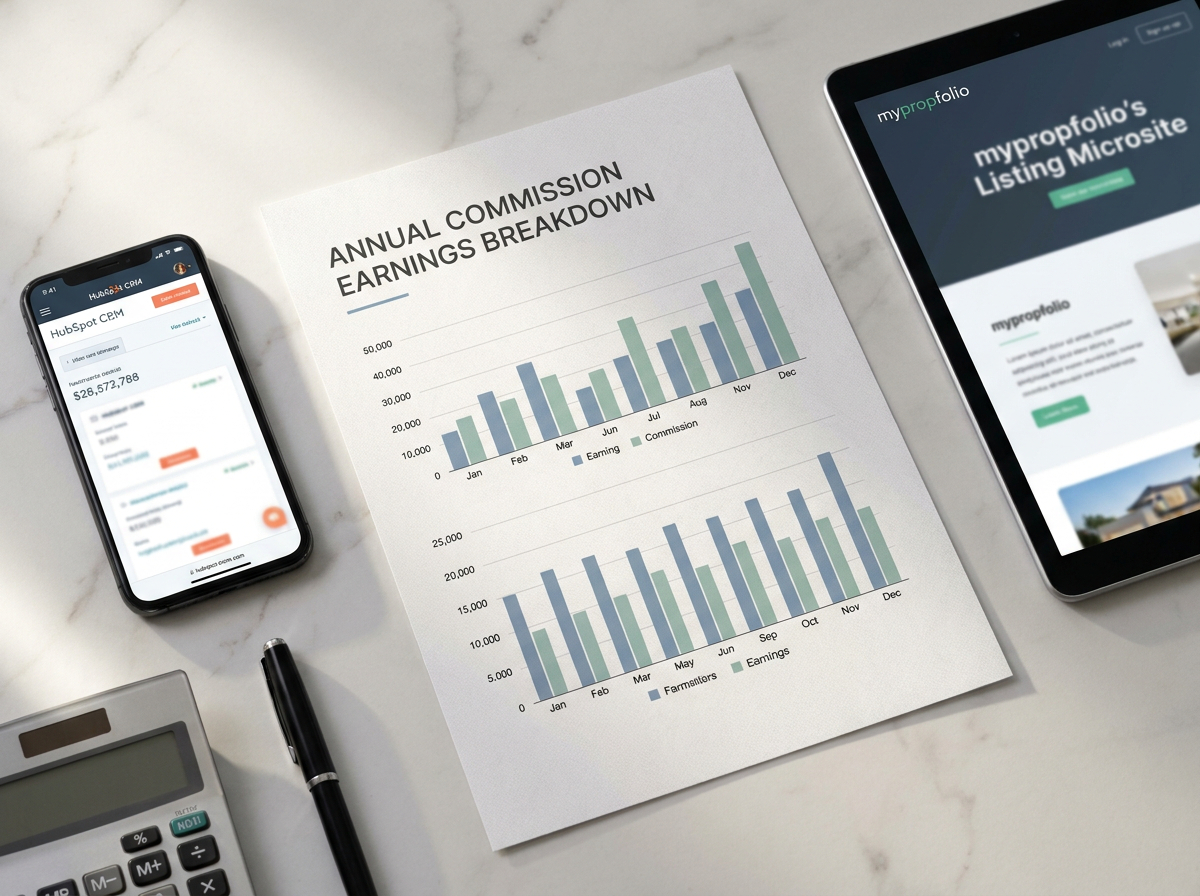
Dedicated listing page: A mypropfolio listing page for a rental unit gives you a shareable link that previews professionally on WhatsApp — ideal for sharing through agent networks, social media, and corporate relocation contacts. When a tenant's HR department or relocation coordinator forwards your listing, the impression it creates matters.
Agent network: Engaging a rental agent gives you access to co-broking with other agents' tenant pools. A well-connected rental agent can often find a qualified tenant faster than a landlord-managed listing, because they have established relationships with corporate relocation managers and expat HR teams.
Tenant Qualification
Do not skip this. A problem tenant is far more costly than a brief vacancy.
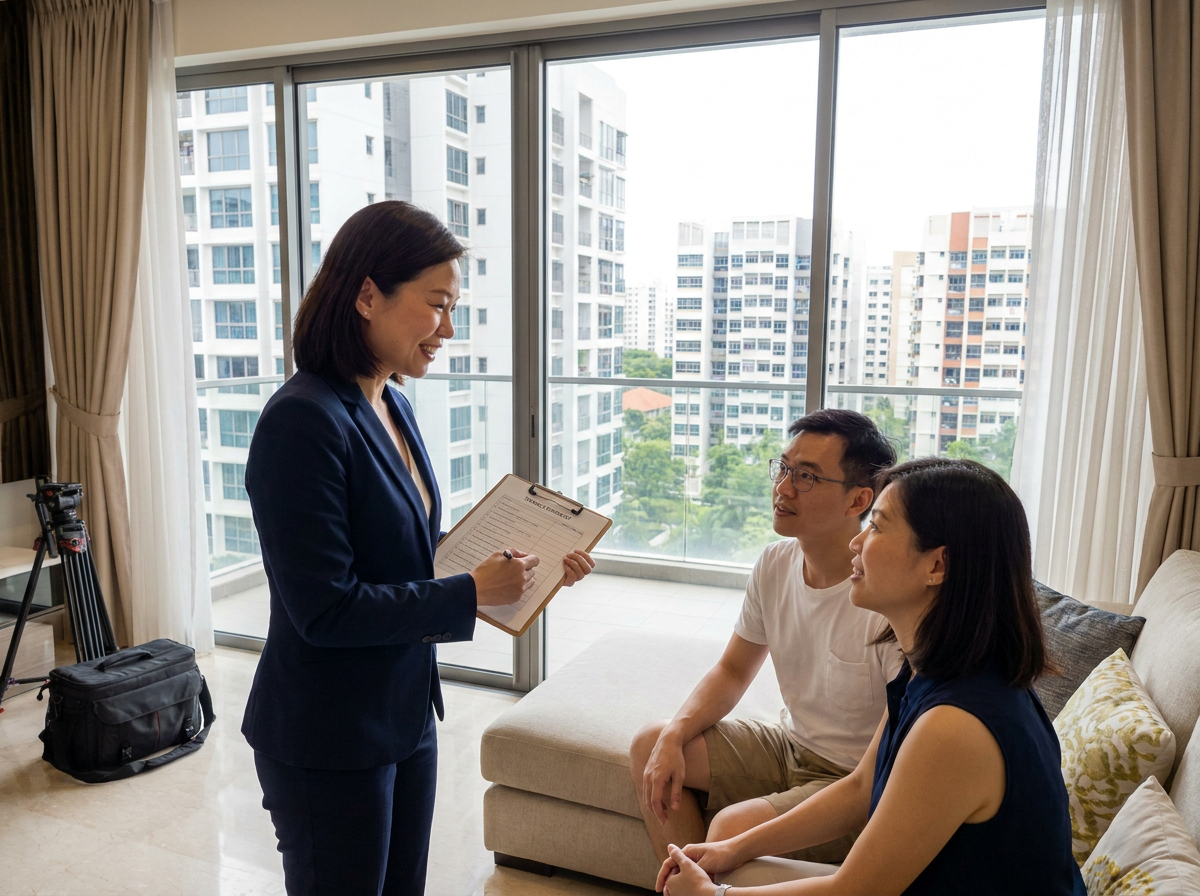
Check employment pass validity: For expat tenants, confirm their Employment Pass or S Pass validity is at least 6 months longer than the proposed lease end date. A tenant whose pass expires mid-tenancy creates complications.
Income verification: Standard practice is to request the tenant's last 3 months' payslips and employment letter. The monthly rent should not exceed approximately 30-40% of the tenant's gross monthly income — a tenant stretched beyond this is a credit risk.
References: Request references from the tenant's previous landlord if they have rented in Singapore before. A previous landlord's reference is the most predictive indicator of tenant behaviour.
For HDB subletting: Confirm the tenant's pass type and validity dates before submitting the HDB subletting application — an application with incorrect pass details causes delays.
Part 5: The Tenancy Agreement
The Tenancy Agreement (TA) is the legal contract between landlord and tenant. Key clauses every Singapore tenancy agreement should include:
Security deposit: Standard practice is 1 month's deposit for a 1-year lease, 2 months for a 2-year lease. The deposit is held by the landlord and returned at end of tenancy subject to any deductions for damages beyond fair wear and tear.
Diplomatic clause: For expat tenants on corporate assignments, include a diplomatic clause — typically allowing either party to terminate after the first 12 months with 2 months' written notice if the tenant is required to relocate. This is a standard request from expat tenants and refusing it reduces your qualified tenant pool unnecessarily.
Air-conditioning servicing: Specify who is responsible for quarterly aircon servicing (typically the tenant) and who pays for compressor or major repairs (typically the landlord).
Utility responsibilities: Standard Singapore practice is tenants pay SP Services utility bills directly; landlord pays property tax, MCST maintenance fees (if condo), and structural repairs.
Inventory list: For furnished units, attach a detailed inventory list with condition notes. This is your reference point at end of tenancy for damage assessment.
Stamp duty: The tenancy agreement must be stamped with IRAS. Stamp duty for rental agreements is paid by the tenant and calculated based on total rent × lease duration. For a 2-year lease at SGD 4,000/month: stamp duty = (SGD 4,000 × 24 months × 0.4%) = SGD 384. This is typically handled by the agent or the tenant's lawyer but must be completed within 14 days of signing.
Part 6: Tax Obligations for Landlords
Rental income in Singapore is taxable. Key points:
All rental income must be declared: Rental income is added to your total taxable income and taxed at your marginal rate (0-24% for residents). As of early 2026, rental income in Singapore is taxed as personal income at progressive rates from 0% to 24%.
Deductible expenses: You can deduct mortgage interest (not principal), property tax, MCST maintenance fees, agent commission, repair costs (not improvement costs), and insurance premiums from your gross rental income before calculating taxable rental income.
Property tax: Landlords pay property tax based on Annual Value — not purchase price. A unit renting at SGD 4,000/month could owe roughly SGD 300-500 in property tax. Non-owner-occupied residential properties are taxed at higher progressive rates than owner-occupied ones.
File your rental income under your annual IRAS income tax return. Keep records of all income received and expenses paid for at least 5 years.
The Bottom Line for Landlords in 2026
The Singapore rental market in 2026 favours landlords who price correctly, qualify tenants rigorously, and present their properties professionally. The era of any unit renting at asking price without effort — the 2021-2023 dynamic — has given way to a market where tenant choice is real and landlords who stand out through presentation quality and responsive management win the best tenants.
A well-presented rental listing — professional photos, a comprehensive listing page with full unit details and a direct WhatsApp CTA — attracts more qualified tenants faster and at better prices than a poorly presented listing at the same price point. This is as true for a SGD 2,500/month HDB flat as it is for a SGD 7,000/month CCR condo.
Present your rental listing professionally. See how mypropfolio works for rental properties →
Further reading: